
Is this one new failure, a repeat, a recovery, or noise?
Normalize source events against a stable alert key so current state, recovery, repeat count, flapping, and active-event count remain distinct facts.
Capability
Turn authenticated monitoring events into stable alert instances with guarded qualification, configurable delivery, and retained routing evidence.
Qualified alert inbox
Authenticated source endpoints
Stable alert lifecycle
Routing decisions
Operational need
Operators can see what arrived, how it was qualified, where it was sent, whether it arrived, and how their corrections improve later decisions.
Operating signals
What you get
Where it starts
These examples enter the product surface that owns their state. They do not all become a case, ticket, owner, or shared evidence record automatically.
Normalize source events against a stable alert key so current state, recovery, repeat count, flapping, and active-event count remain distinct facts.
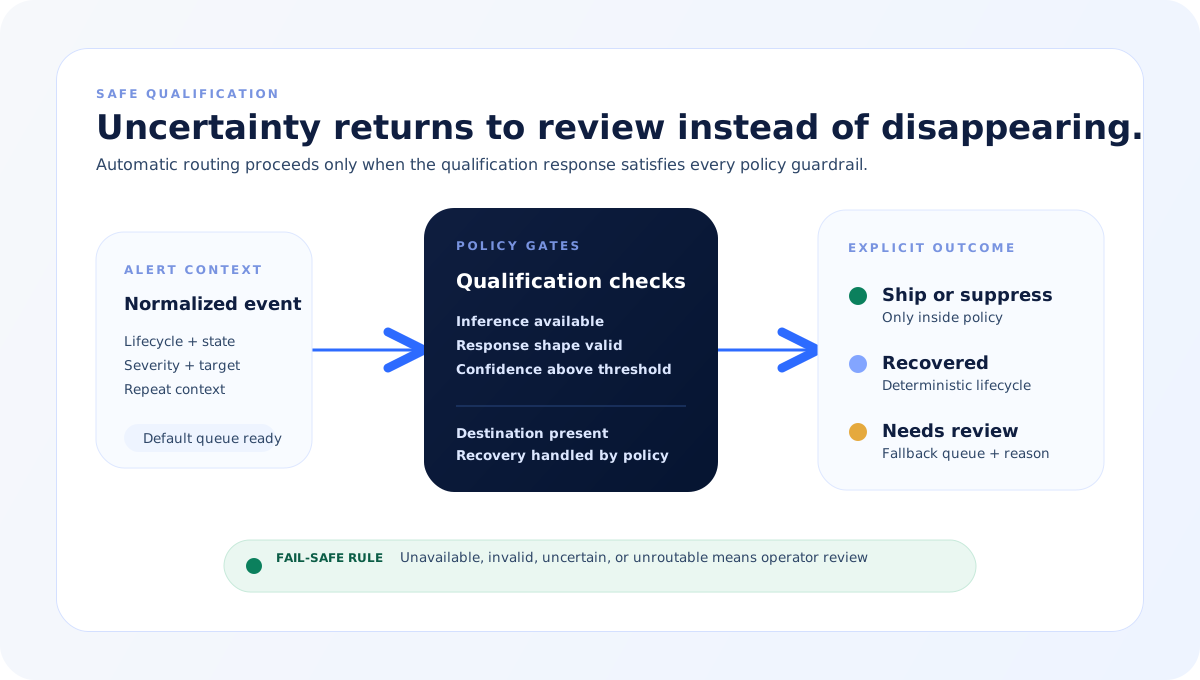
Apply per-source confidence thresholds, deterministic recovery policy, priority, and a safe default destination whenever qualification is unavailable or uncertain.
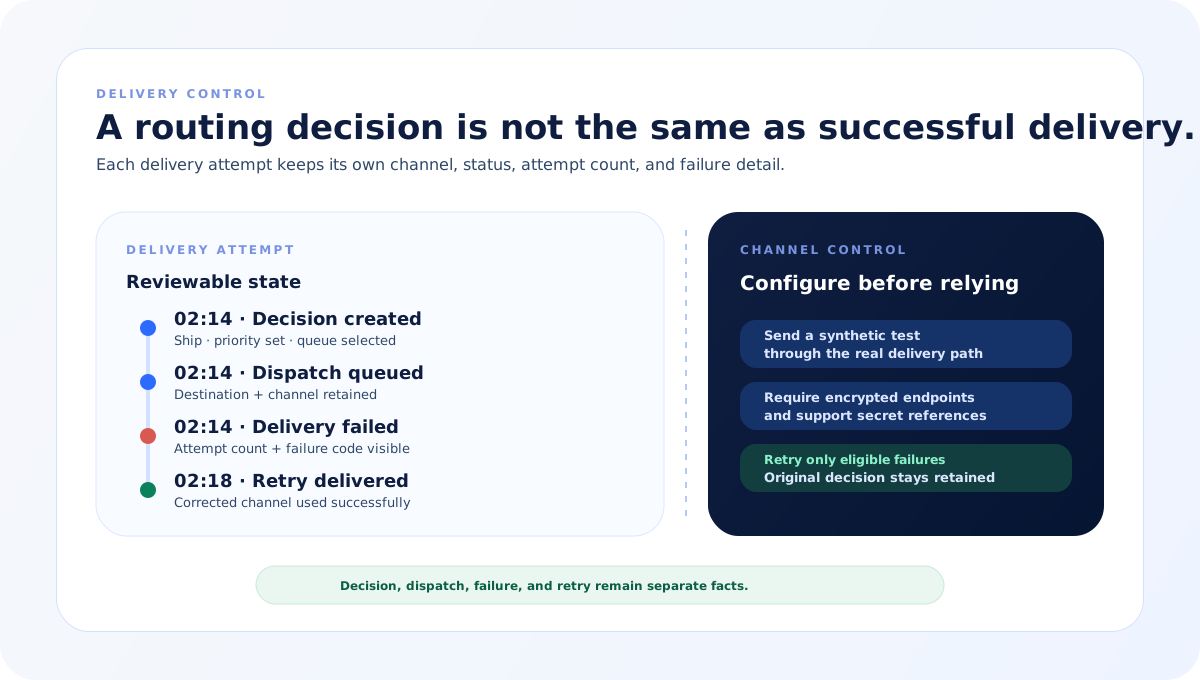
Review the destination, delivery binding, dispatch state, attempt count, and failure code, then retry a failed delivery after correcting its configuration.
Create or disable source endpoints, rotate bearer tokens, and use a generated webhook kit or one-shot installer without exposing the token again later.
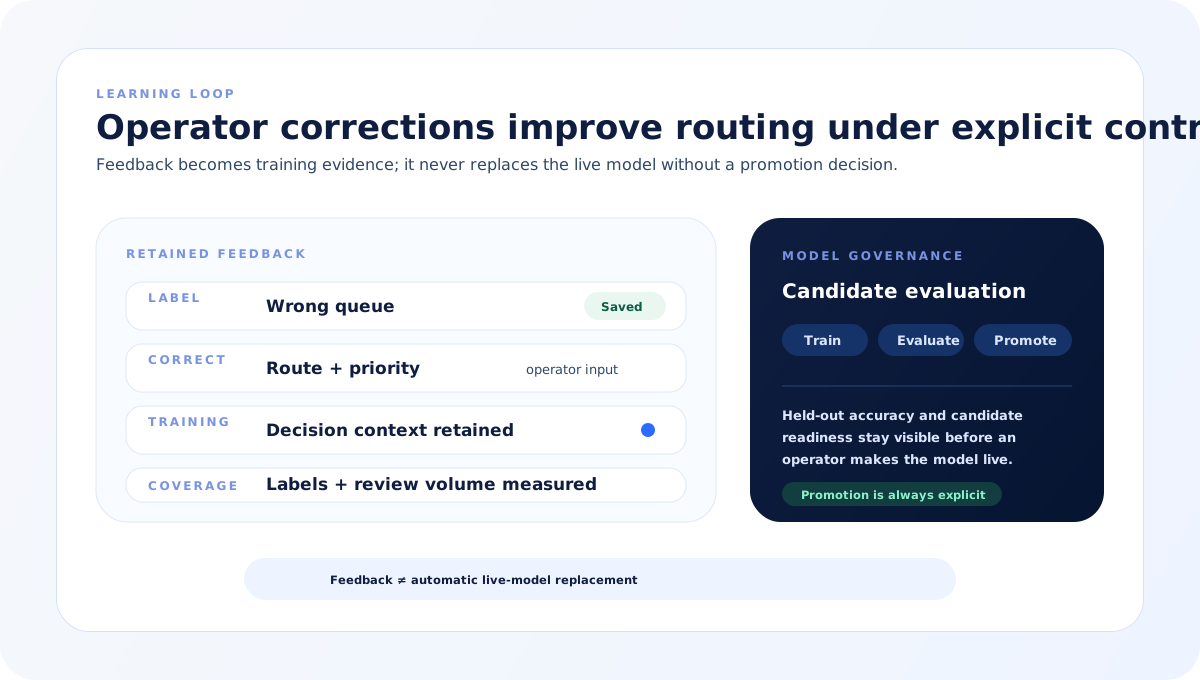
Track labels, decision coverage, review volume, model accuracy, and candidate readiness, then promote a better model explicitly.
Retain ingest attempts, normalized events, decisions, dispatches, operator corrections, and redacted payload references as separate records.
How it works
The product path below names its inputs, decisions, controls, and output without implying the same lifecycle applies to every capability.
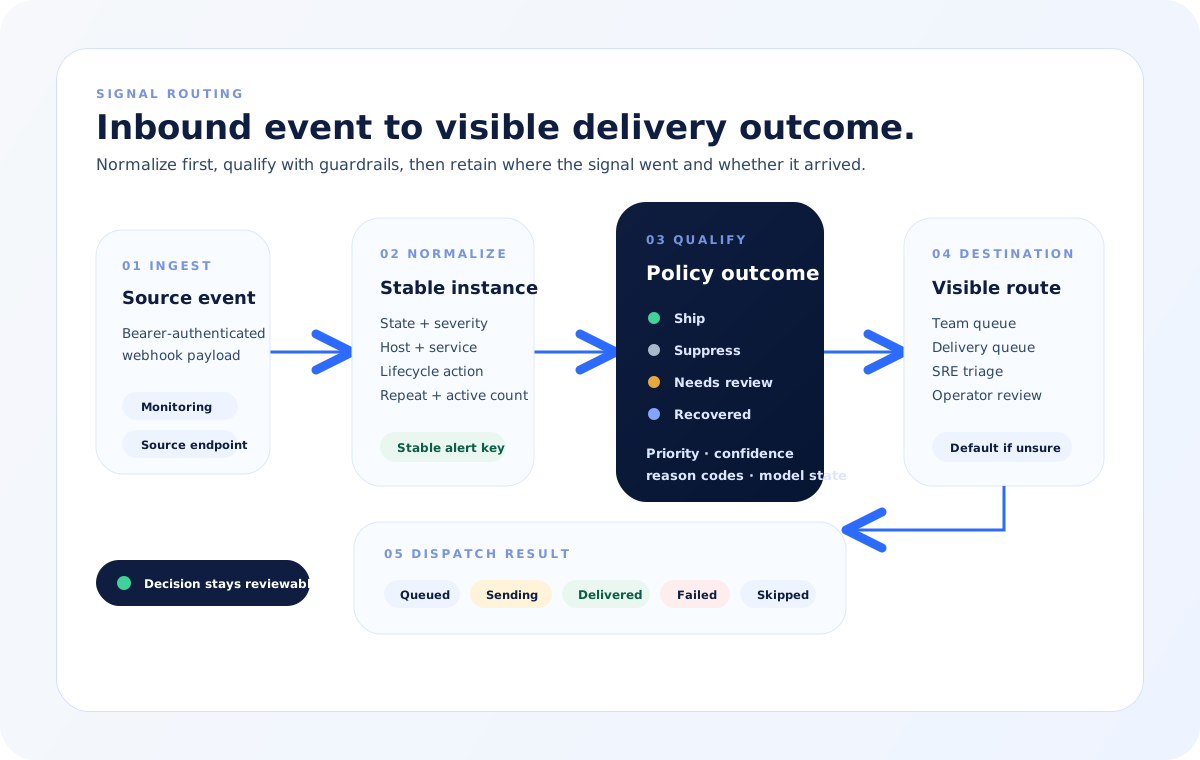
Accept a per-source bearer token, record the ingest attempt, hash request metadata, and retain a redacted payload archive for accepted events.
Create deterministic event and alert-instance identities with state, severity, affected target, lifecycle action, and repeat context.
Use appliance-based inference, confidence thresholds, and deterministic recovery rules to ship, suppress, recover, or request review.
Send qualified work to a team or delivery destination and retain queued, sending, delivered, failed, no-binding, or skipped state.
Label the decision, record a corrected route or priority, and retry eligible delivery failures after the channel is fixed.
Measure feedback coverage and held-out accuracy, compare candidate models, and require explicit promotion before a candidate becomes live.
Product model
The diagrams show how authenticated source events become stable alert instances, how uncertain qualification falls back safely, how delivery remains reviewable, and how operator feedback is governed into better models.
Signal routing
A connector normalizes source payloads into a stable alert instance. Policy can ship, suppress, request review, or record recovery; destination and dispatch state remain visible after the decision.
Safe qualification
Unavailable inference, invalid output, low confidence, or a missing destination produces an explicit review outcome through the configured fallback queue.
Learning loop
Labels and corrections become training records. Coverage, held-out accuracy, and candidate readiness stay visible, and a candidate becomes live only after explicit promotion.
Delivery control
Destination, channel, attempt count, delivery state, and failure code remain separate. Operators can test a channel before relying on it and retry eligible failures after correcting the configuration.
What it includes
These parts participate in the workflow. The record shows what was used and why it mattered.
Authenticated ingress
Per-source endpoints use bearer tokens, record accepted and rejected attempts, and retain redacted payload references for accepted events.
Source instances, token rotation, webhook kit, install grant, ingest attempts, and payload archive
Stable alert instances
Normalized events update active or recovered instances while retaining current state, severity, repeats, flapping, and active-event count.
Stable event key, stable alert key, lifecycle event, and instance record
Guarded qualification
Each decision retains ship, suppress, needs-review, or recovered outcome with priority, confidence, model state, reasons, and evidence.
Appliance inference, timeout, response validation, thresholds, default route, and recovery policy
Destinations and delivery
Team and delivery queues connect to email, collaboration, incident-management, HTTPS webhook, or internal channels with retained attempt state.
Route destinations, delivery bindings, secret references, templates, and dispatches
Operator inbox
Operators can filter active or recovered instances, sort repeats, inspect the latest route, label decisions, and retry eligible failures.
Routing inbox, exact totals, feedback labels, and dispatch retry
Channel testing and templates
Channels can be tested before use; collaboration cards can be generated, edited, validated, previewed against a real alert, and test-sent.
Synthetic test delivery, source-aware variables, template revisions, preview, and test render
Feedback and model governance
Labels and corrections feed a training export while learning progress and candidate accuracy remain visible before explicit promotion.
Routing feedback, training records, maturity, held-out accuracy, model catalogue, and promotion
Control model
Integrations, AI assistance, routines, and agents use different permissions and records. The controls below describe this capability rather than a universal approval model.
Low-confidence or unavailable qualification falls back to operator review instead of silently suppressing or misrouting the signal.
Recovery is a deterministic lifecycle outcome and does not require a model response.
Source endpoints can be disabled and their bearer tokens rotated without changing the stable alert-instance history.
Accepted payloads are redacted before archival; ingest attempts retain hashes and bounded request metadata for review.
External endpoints require encrypted transport and can use secret references instead of embedding sensitive values in channel configuration.
Failed or unbound deliveries remain explicit and retryable; operator corrections are retained as training labels rather than silently rewriting the original decision.
Value over time
Receive
Route
Review
Next step
Book a walkthrough and see this workflow mapped to the integrations and controls you already use.