
Which assets are covered, and are their scanners actually ready?
Review managed assets, discovered services, scanner assignments, appliance links, profiles, readiness, last scan, and open-finding counts before trusting the posture view.
Capability
Review scanner findings and run supported hardening remediation while keeping source observations, execution results, and verification evidence distinct.
Managed asset coverage
Durable scan activity
Grouped findings and provenance
Hardening assignments
Operational need
Teams can distinguish what scanners observed from what hardening automation changed, then verify and report both without losing provenance.
Operating signals
What you get
Where it starts
These examples enter the product surface that owns their state. They do not all become a case, ticket, owner, or shared evidence record automatically.
Review managed assets, discovered services, scanner assignments, appliance links, profiles, readiness, last scan, and open-finding counts before trusting the posture view.
Switch between grouped vulnerabilities and finding instances while retaining CVE, CVSS, severity, scanner, asset, status, first seen, last seen, and source run.
Open the finding detail for descriptions, affected targets, raw bounded scanner evidence, scan provenance, and scanner-supplied remediation guidance.
Keep executor capability visible, assign the right target, apply global or per-target control state, and require confirmation before a supported remediation changes configuration.
Review each control status and the recorded operation, target, before value, desired value, after value, outcome, and any precondition, write, or verification error.
Save immutable vulnerability snapshots for executive, technical, or asset views, while generating hardening compliance from the current retained run results.
How it works
The product path below names its inputs, decisions, controls, and output without implying the same lifecycle applies to every capability.
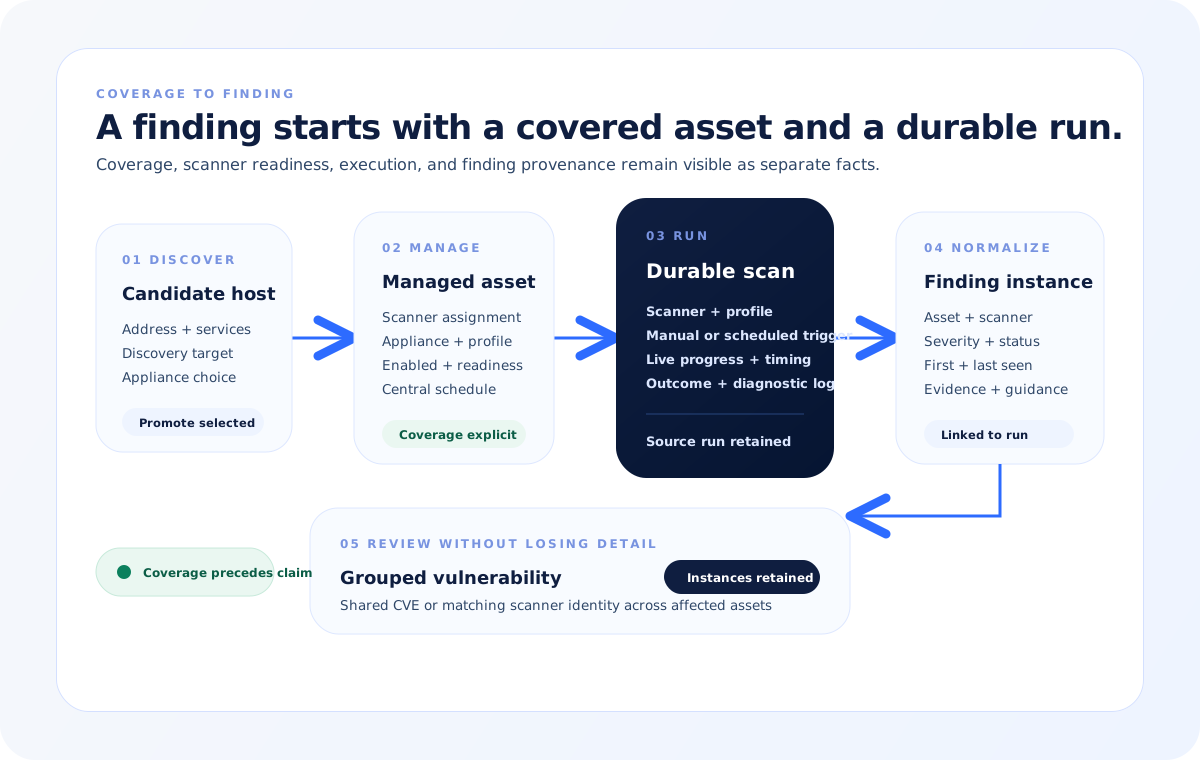
Review discovered hosts and services, promote selected candidates, and attach available scanners and profiles to managed assets.
Run scanners manually or by central schedule and keep per-scanner progress, configuration, outcome, and diagnostic history.
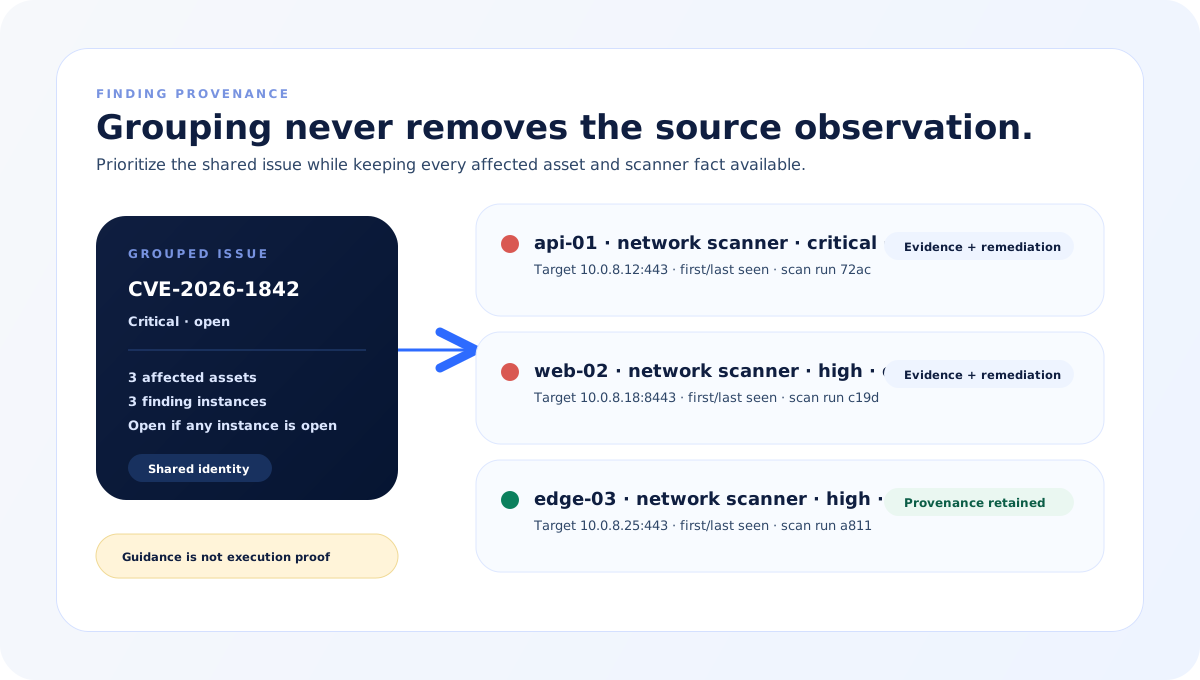
Group related issues for prioritization without losing the individual asset observation, evidence, remediation guidance, or source run.
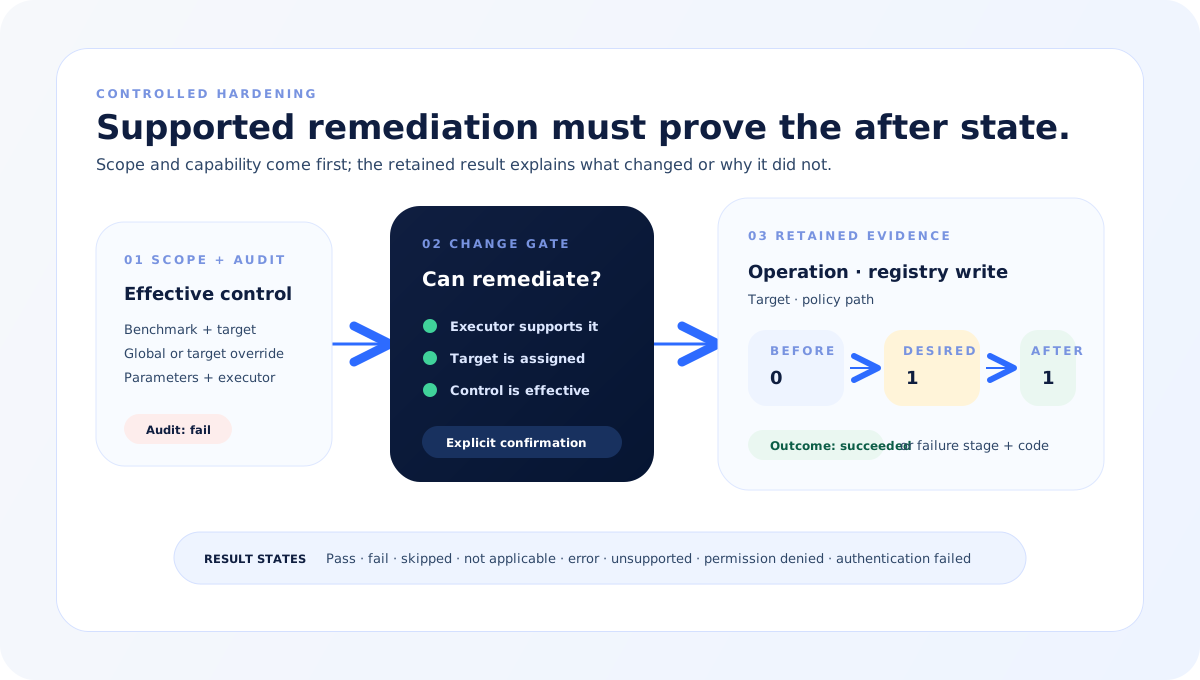
Apply benchmark scope and overrides to assigned targets, then record pass, fail, skipped, not-applicable, unsupported, permission, authentication, or execution error state.
For supported benchmarks, confirm the change and retain the operation plus before, desired, after, outcome, and verification error evidence.
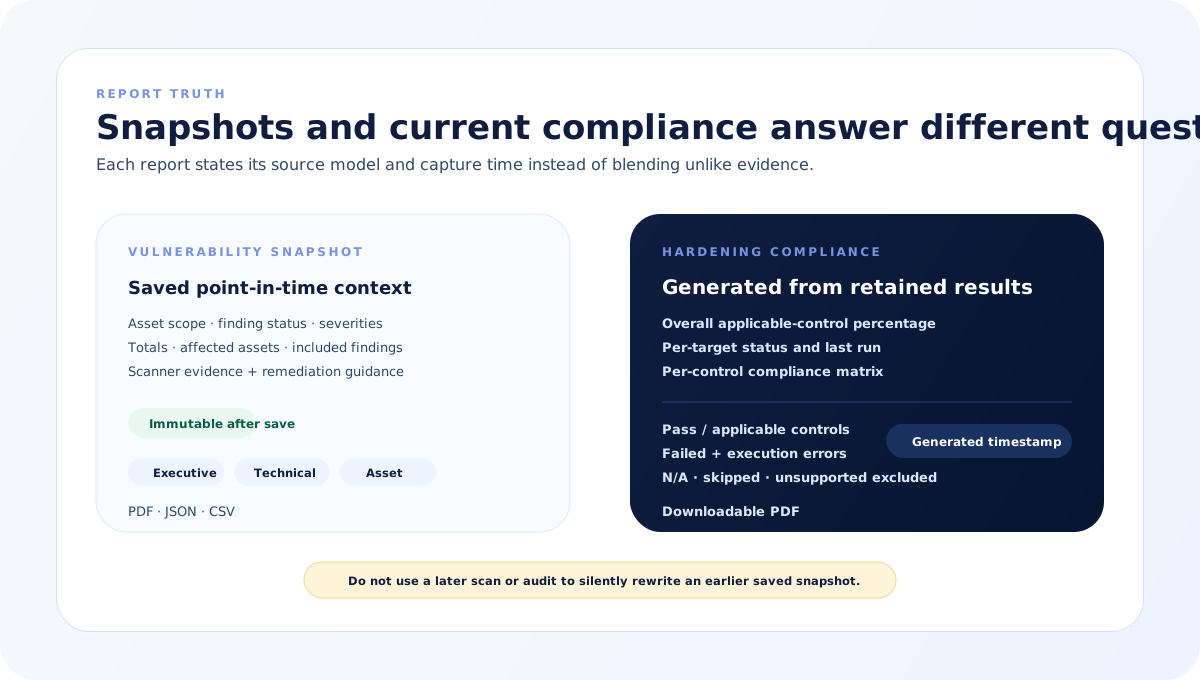
Create immutable vulnerability snapshots or generate current hardening compliance without confusing one report type for the other.
Product model
The diagrams show how coverage becomes traceable scanner evidence, how grouped vulnerabilities preserve each affected asset, how supported hardening changes retain verification proof, and why report snapshots state when their truth was captured.
Coverage to finding
Discovery can promote a candidate into a managed asset. Scanner assignment, profile, readiness, and run provenance remain attached when normalized findings appear as grouped issues and individual asset observations.
Finding provenance
A vulnerability group helps prioritize a shared CVE or matching issue, while each finding keeps its asset, scanner, severity, status, timestamps, raw evidence, remediation guidance, and source run.
Controlled hardening
Benchmark capability and effective control state define what can run. After explicit confirmation, supported remediation records operation, target, before, desired, after, outcome, and any verification failure.
Report truth
Saved vulnerability reports preserve an immutable point-in-time context for executive, technical, or asset views. Hardening compliance is generated from retained target and control results with excluded states called out.
What it includes
These parts participate in the workflow. The record shows what was used and why it mattered.
Discovery and managed assets
Discovery candidates, services, promoted assets, scanner assignments, readiness, recent runs, and finding counts form the coverage model.
Discovery targets, candidates, managed assets, services, and assignments
Scanner control plane
Installed scanner availability, reusable descriptor-driven profiles, central schedules, bulk starts, live progress, outcomes, and diagnostic logs stay reviewable.
Appliances, scanner inventory, profiles, schedules, queues, and runs
Vulnerability workspace
Normalized groups and bounded finding instances expose CVE, CVSS, severity, affected asset, status, timestamps, scanner evidence, remediation guidance, and provenance.
Finding groups, instances, canonical identity, and source run links
Hardening catalog and controls
Benchmarks define executor capability, controls, defaults, parameters, global state, and per-target overrides before work is dispatched.
Benchmark catalog, controls, assignments, states, parameters, and overrides
Hardening runs and evidence
Audit and supported remediation retain target, mode, status, per-control results, operation detail, before/desired/after snapshots, and structured failure stage.
Agent or integration executor, result records, and normalized evidence
Security reports
Executive, technical, and asset vulnerability snapshots can be saved and exported; hardening compliance reports summarize applicable control results by target.
Immutable vulnerability snapshots and generated hardening compliance
Control model
Integrations, AI assistance, routines, and agents use different permissions and records. The controls below describe this capability rather than a universal approval model.
A scanner finding supplies evidence and remediation guidance; it does not automatically prove that a fix ran or close itself as remediated.
Scanner profiles use scanner-defined fields, and durable runs preserve configuration, progress, outcome, and diagnostic provenance.
Hardening remediation is exposed only when the benchmark executor supports it and requires an explicit confirmation because it changes target state.
Agent-supplied hardening evidence is validated and bounded before storage; unsupported, permission, authentication, and verification failures remain distinct.
Saved vulnerability reports are immutable point-in-time snapshots; current hardening compliance is a separate generated view over retained results.
Value over time
Observe
Assess
Act
Next step
Book a walkthrough and see this workflow mapped to the integrations and controls you already use.